The world's first AI property marketplace
Product Designer & Frontend Engineer
Mar – Jun 2026
1 PM, 3 Engineers, 1 Designer (me!)
Product Design
UX/UI Design
IA
Design Systems
Prototyping
What if finding a property was only the beginning of the journey?
BRIKSY is a property and professional-services marketplace designed to connect people with the businesses and professionals they need throughout their property journey, from finding a home to building, renovating, or maintaining it.
The platform brings property discovery, builders, agents, trades, and professional services into one connected ecosystem, with verification, portfolios, reviews, enquiries, and provider profiles helping users make more informed decisions.
One platform. Every property journey.
Instead of treating BRIKSY as another property-listing marketplace, I designed it as a connected ecosystem where property discovery and professional services live together.
The experience brings together properties, builders, agents, organisations, trades, and specialist professionals, while giving each audience a workflow suited to what they actually need.
Five design pillars shaped the product...
01. Make discovery the starting point
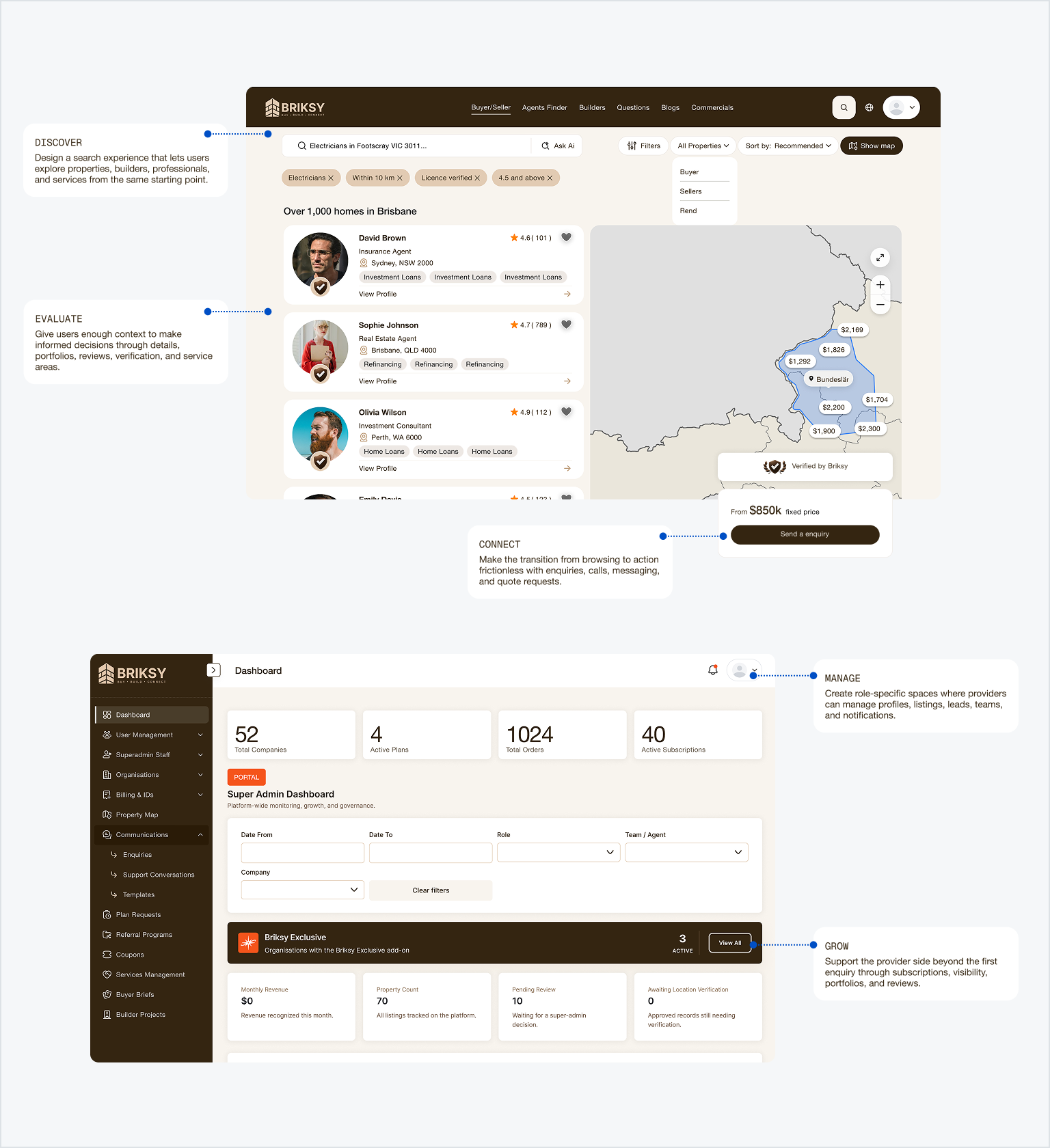
Users can browse properties and professionals through list, grid, or map views, then compare key information such as location, price, services, ratings, portfolios, and verification.
02. Design for different provider types
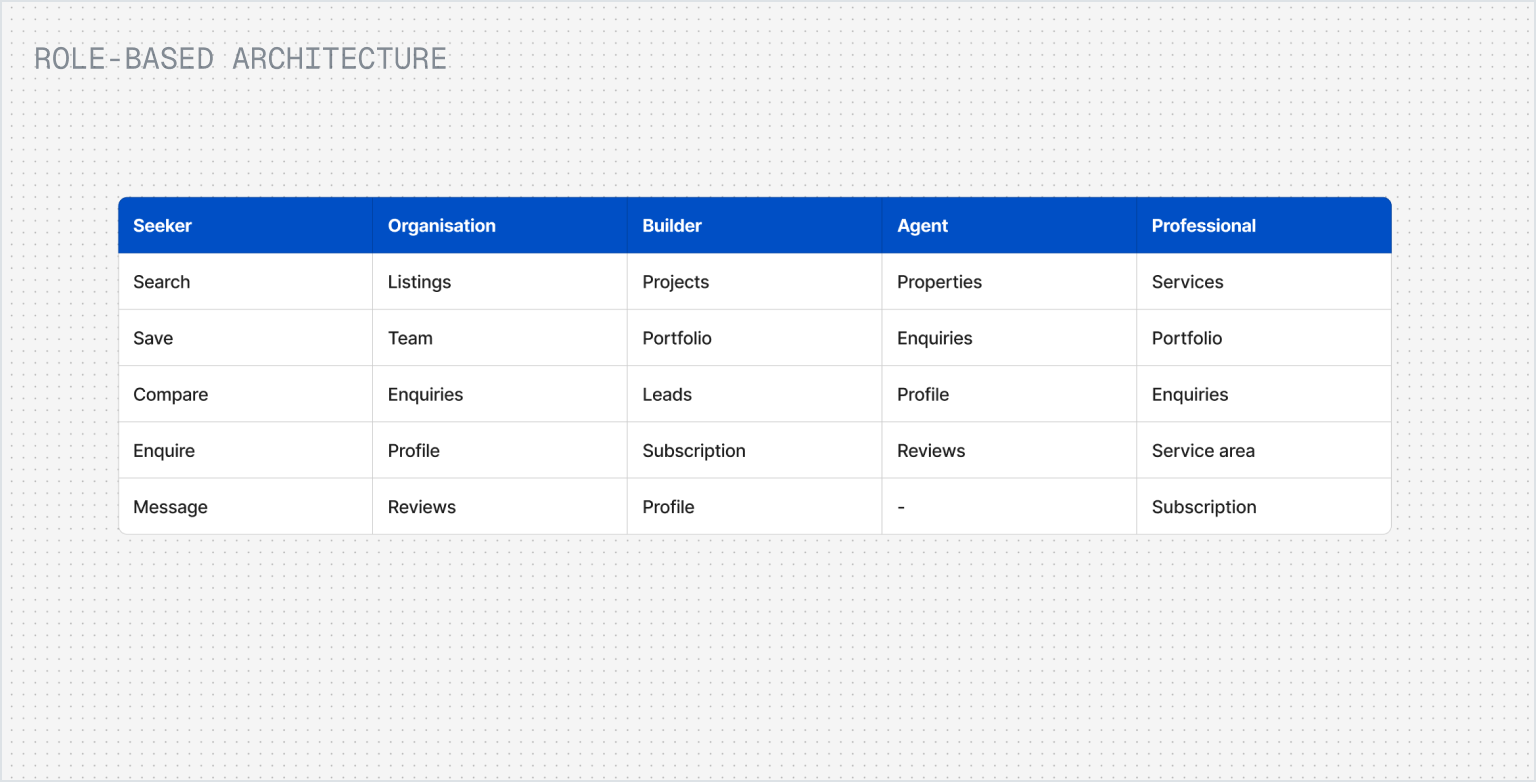
The onboarding branches early based on whether someone is an Organisation, Builder, Agent, or Sole Trader / Professional, because each role has different information, permissions, and publishing needs.
03. Make trust visible
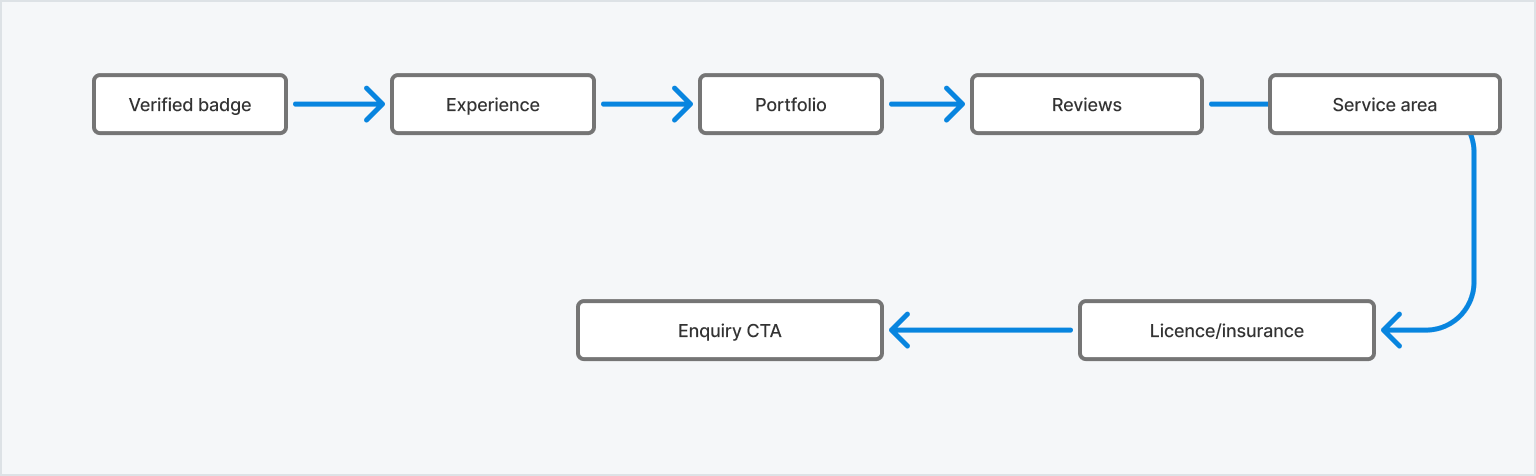
I incorporated verification, experience, portfolios, service areas, reviews, and credentials into the discovery and profile experience so users can understand who they're dealing with before making contact.
04. Turn discovery into action
The product connects discovery directly to enquiries, contact, messaging, and lead management. Property journeys can use direct phone contact, while other provider journeys use enquiry forms and in-app messaging.
05. Build a scalable provider ecosystem
The provider side was designed around the same foundation but with room for different business models including profiles, listings, portfolios, team members, enquiries, subscriptions, analytics, and notifications.
The property journey was fragmented long before BRIKSY.
The challenge wasn't simply that people needed a place to search for properties. The larger problem was everything that happened around the property.
A person could be looking for a home, a builder, a mortgage broker, a conveyancer, a fencing contractor, or an electrician, but each need could lead them to a different platform or provider.
BRIKSY was being shaped around a different idea:
What if the people, properties, and services involved in the property journey could be discovered through one connected marketplace?
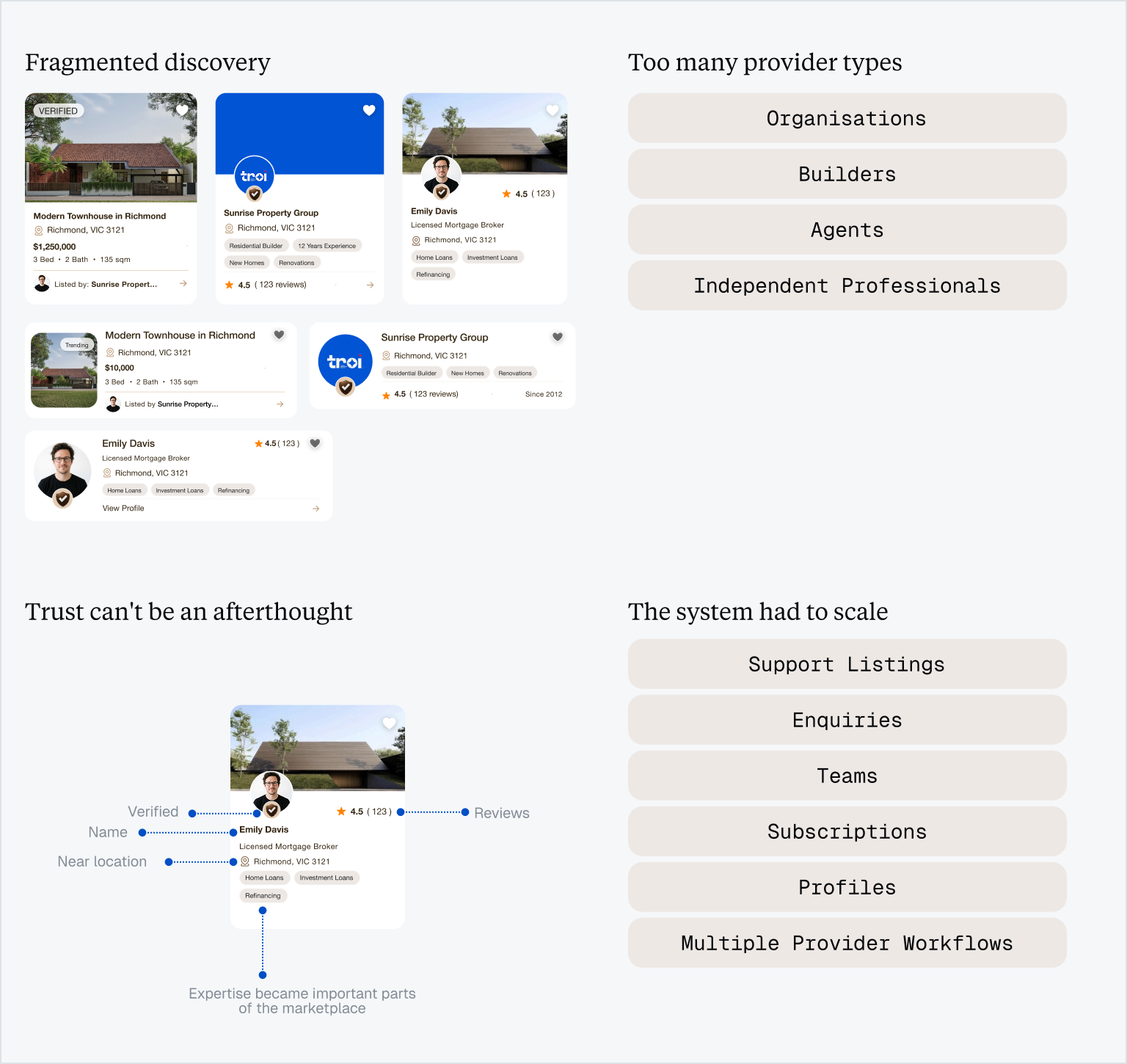
Four things became important early on
How might we make a complex property ecosystem feel simple, trustworthy, and easy to navigate?
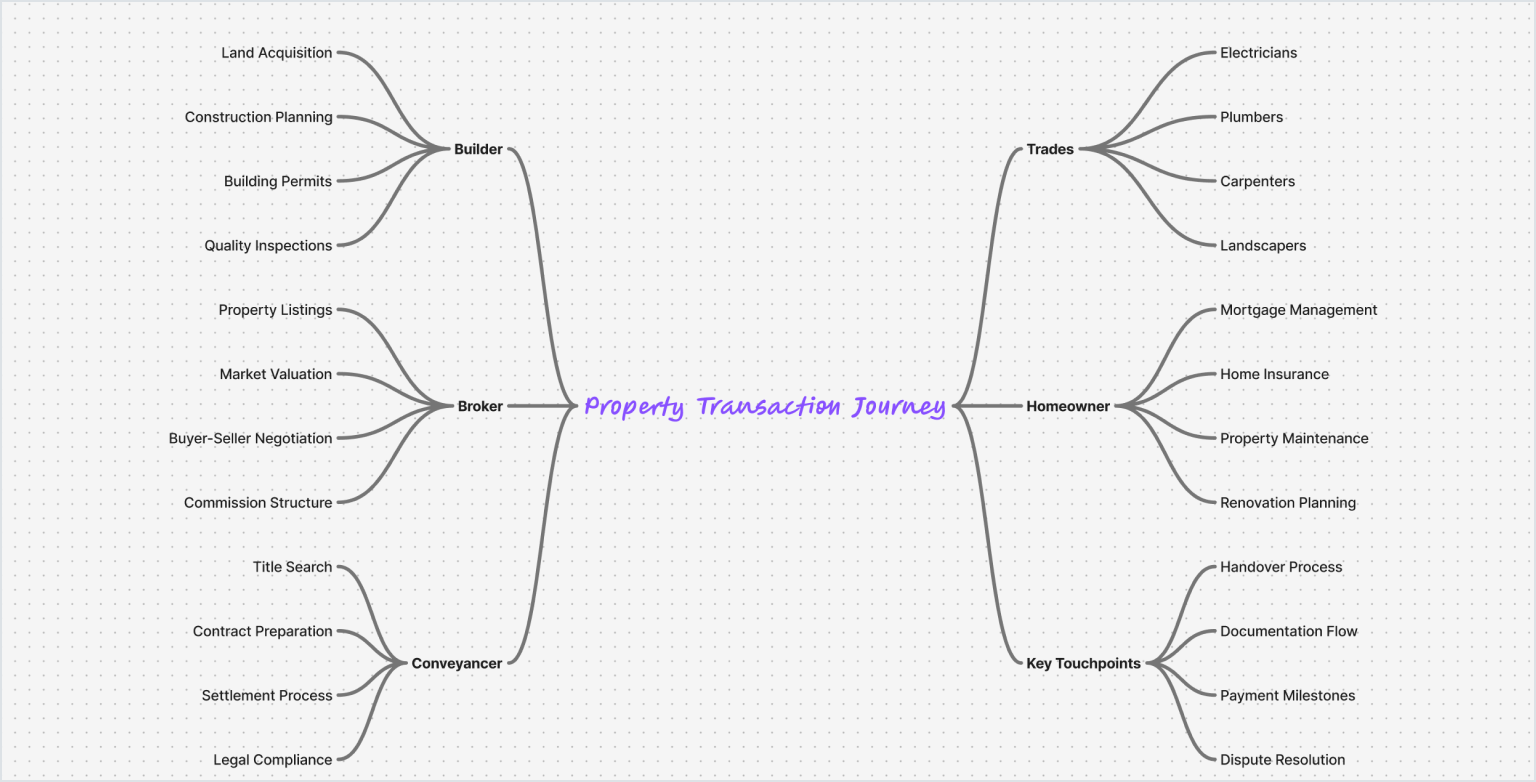
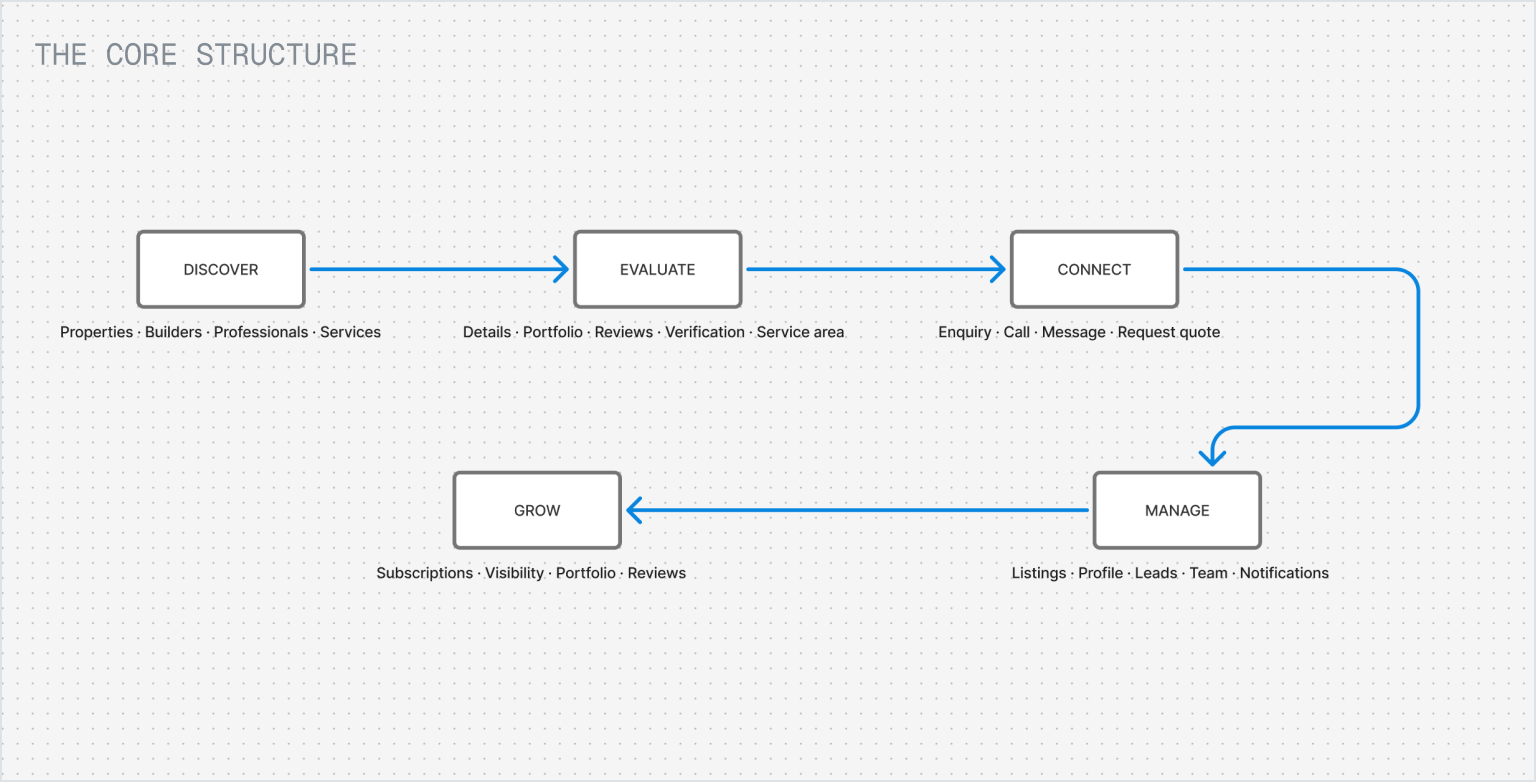
Property discovery was only one part of the opportunity.
Existing property platforms gave BRIKSY a useful reference point for how people discover properties. But the broader property journey extends beyond finding a listing.
For BRIKSY, the opportunity was to connect property discovery with the professionals and services that come next, creating a marketplace that could support the journey beyond the initial search.
1. Property discovery
How users browse, search, filter, compare, save, and enquire about properties.
2. Professional discovery
How businesses and independent professionals can present their expertise, services, portfolios, locations, and reviews.
3. Trust signals
How verification, experience, ratings, reviews, and portfolio evidence can help users evaluate providers.
4. The transition from discovery to action
How a user moves from “I found something” to “I need to contact someone.”
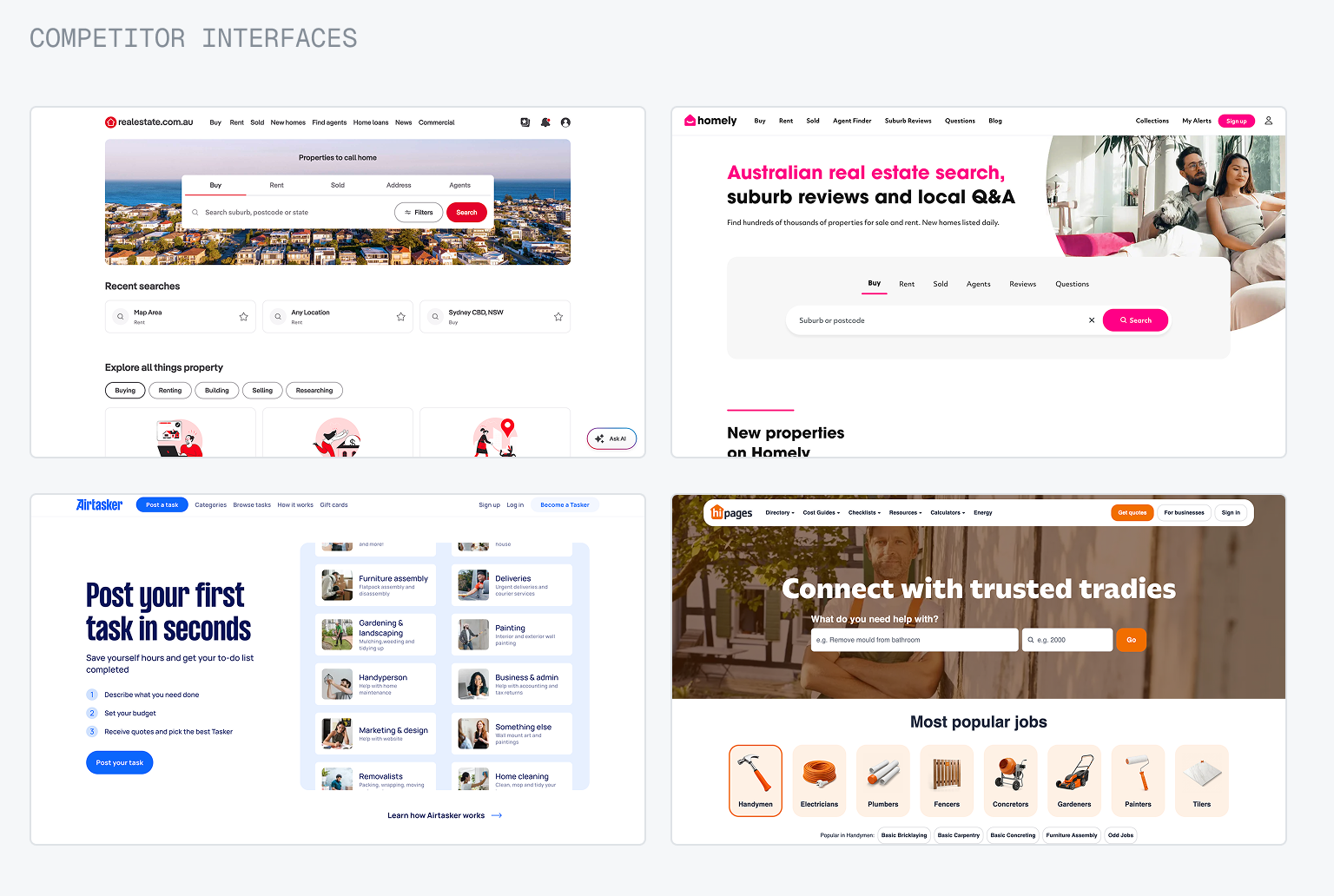
I used Australian property platforms such as realestate.com.au and Homely as references for the property-discovery side of the experience.
Rather than replicating a traditional property portal, BRIKSY was shaped around a broader question:
What happens after someone finds the property?
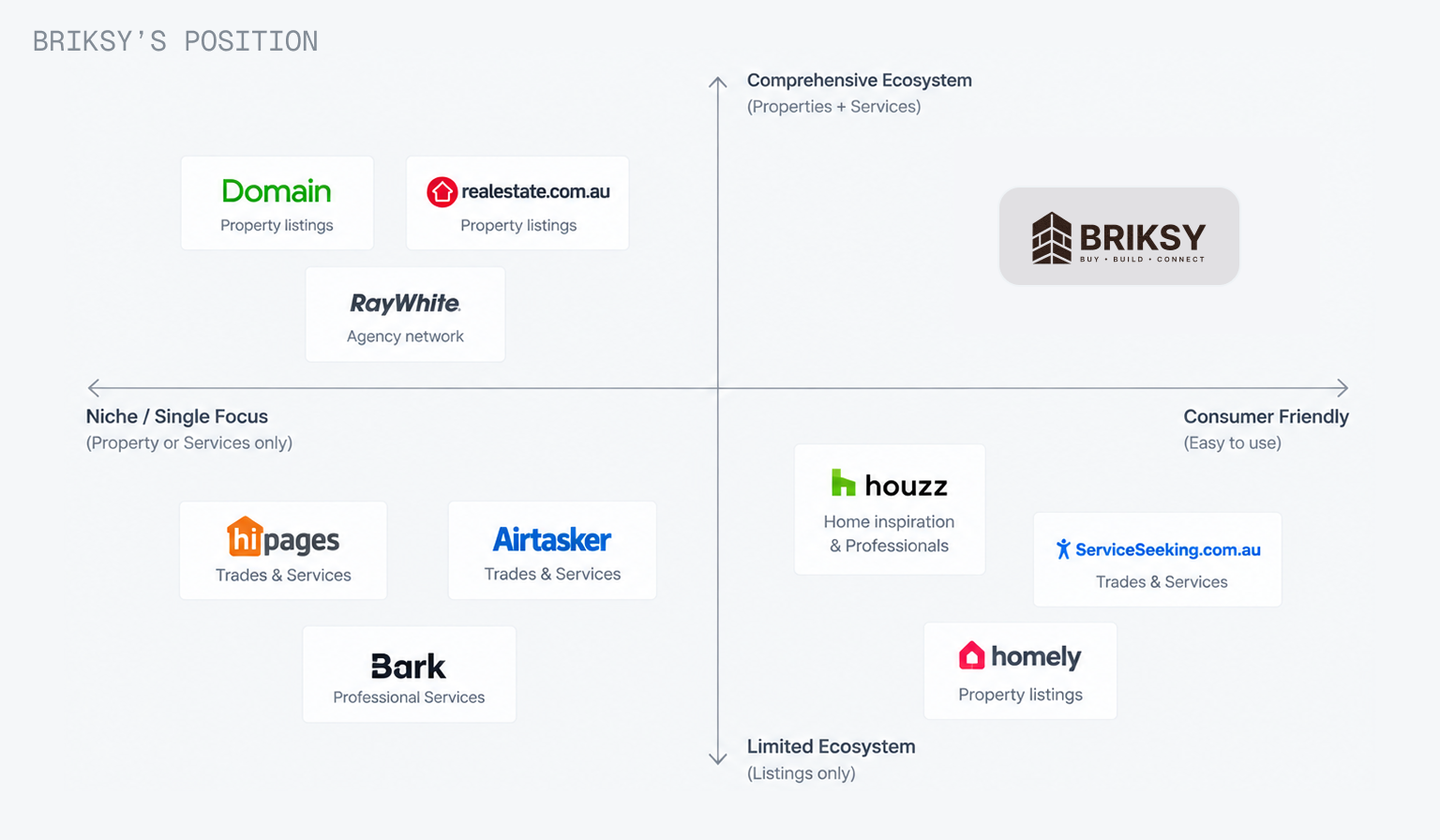
Platforms such as realestate.com.au, Domain, and Homely focus primarily on property discovery, giving users tools to search, filter, compare, save, and enquire about listings.
These experiences are strong at helping people find properties, but the journey often becomes separate once users need builders, trades, brokers, conveyancers, or other property professionals.
Platforms such as hipages, Airtasker, and ServiceSeeking help people discover trades and service providers for specific property-related needs.
They make professional discovery easier, but the experience generally starts with a service requirement rather than the property itself.
For BRIKSY, this created an opportunity to connect both sides of the journey: the property and the people needed around it.
Property platforms help people find a place.
Service marketplaces help people find someone.
BRIKSY is designed to connect both within the same property journey, from discovering a property to finding the professionals and services needed next.
How might we connect the entire property journey without making it feel more complicated?
I had to understand the property journey before designing for it.
I looked beyond property listings to understand what happens before, during, and after someone finds a property, from comparing options to finding the right professionals for the next step.
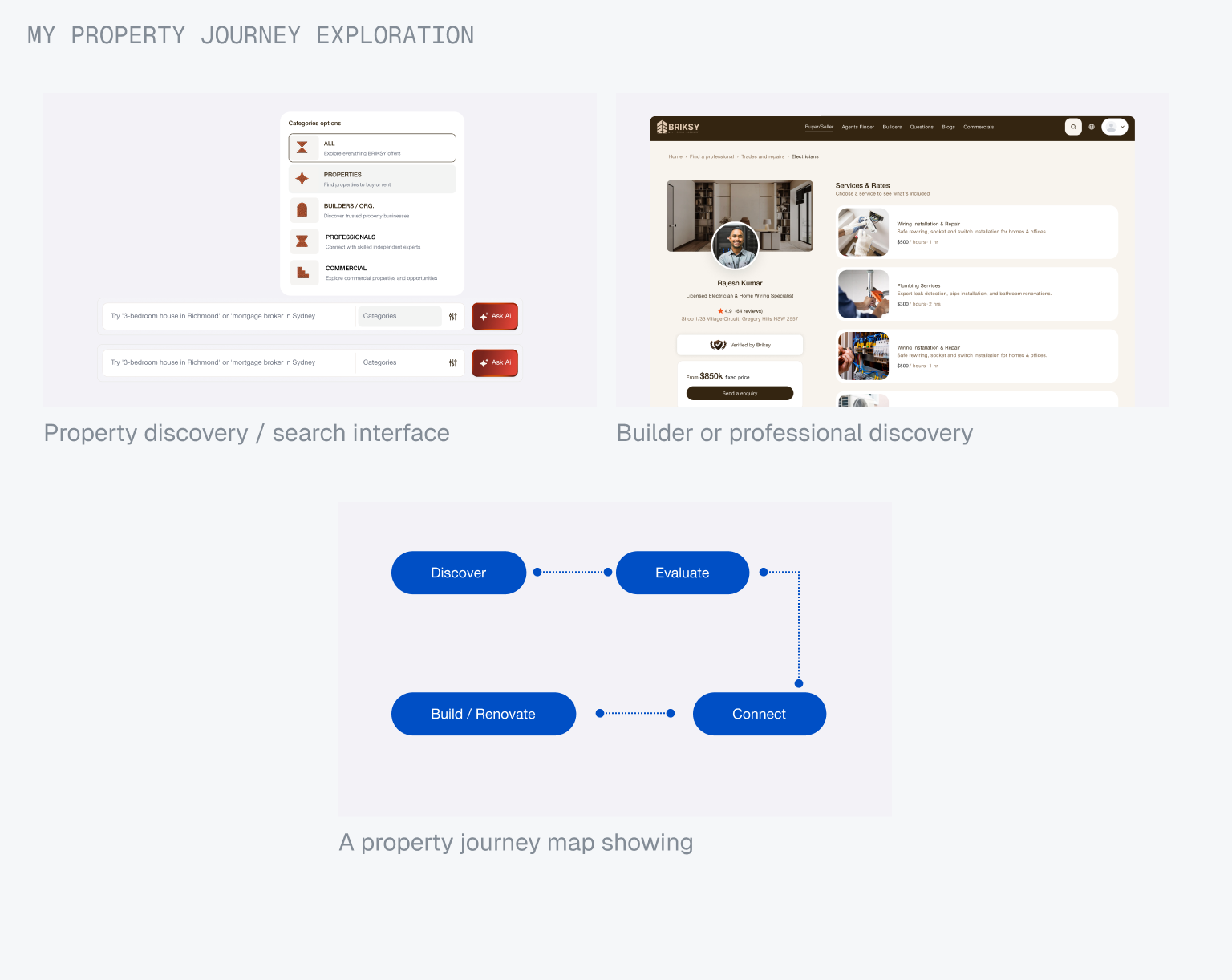
Property platforms solve the search. The journey continues beyond it.
I reviewed existing property and professional-service experiences to understand how users discover properties, evaluate providers, and move from browsing to contacting someone.
Making a complex ecosystem feel simple.
BRIKSY had multiple user types, listing types, services, and actions. The challenge was to organise them without making the experience feel like a collection of separate products.
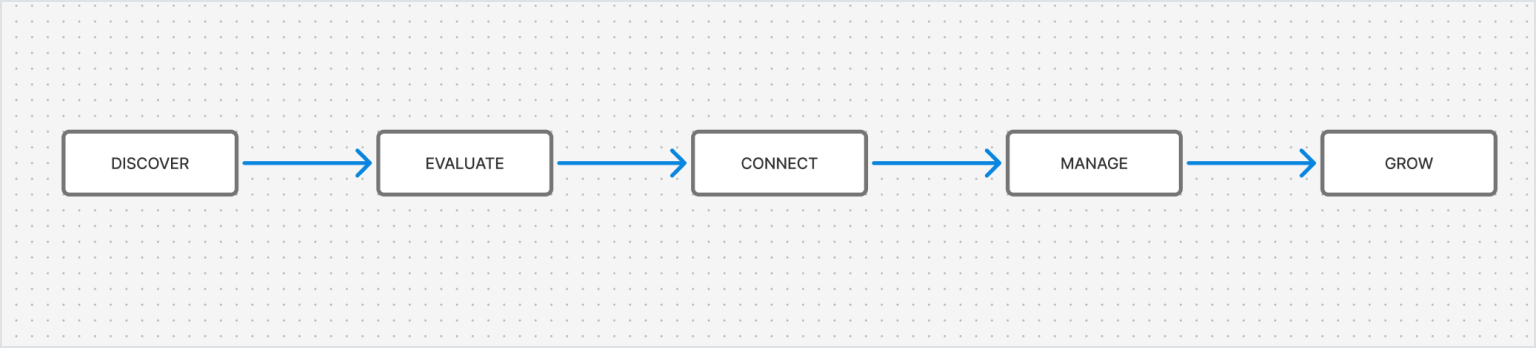
Instead of structuring the experience around internal business categories, I organised it around what users are trying to accomplish.
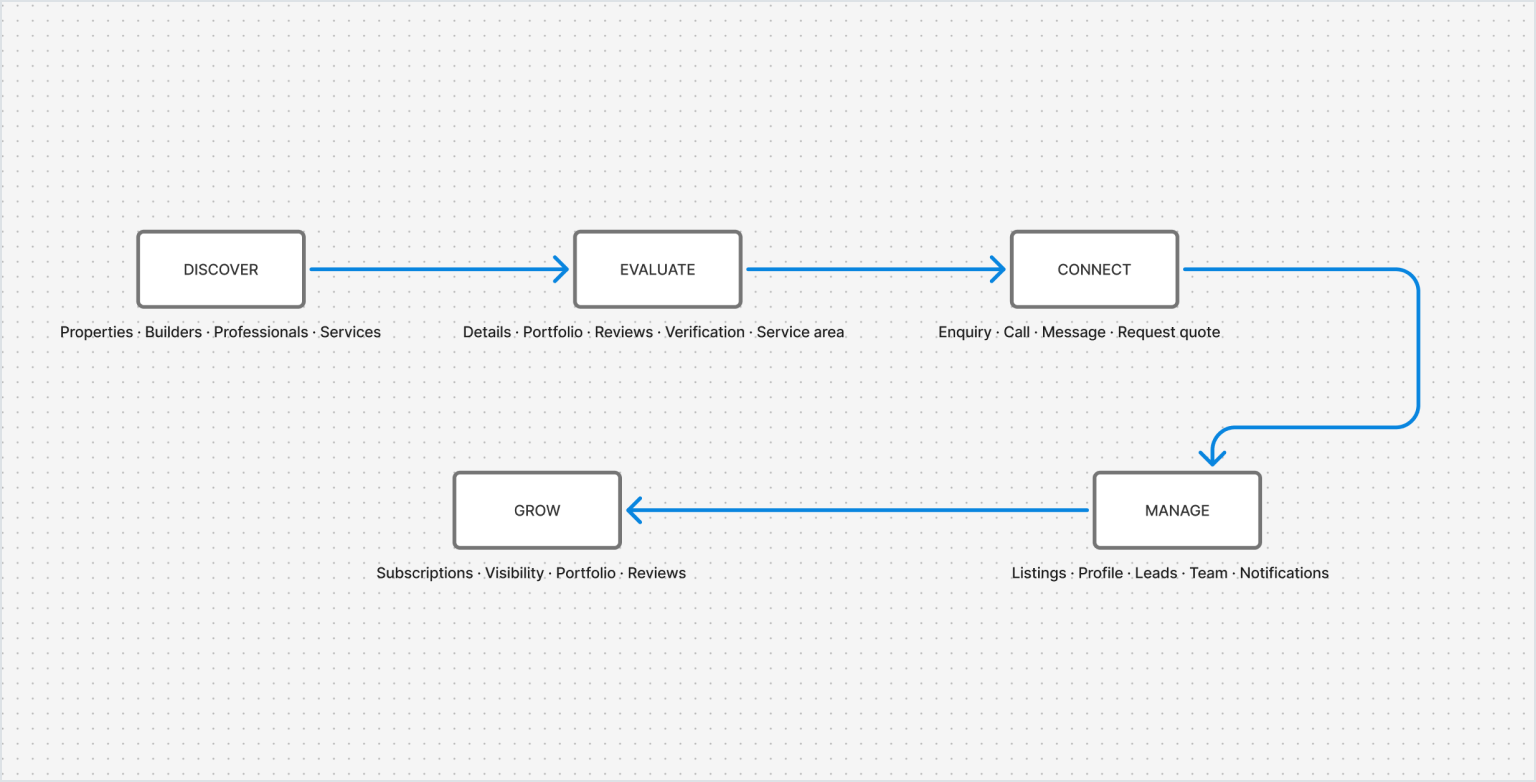
One ecosystem, but not one identical experience.
Designing for the journey, not just the screen.
With the structure defined, I moved from mapping the ecosystem to designing the experiences within it.
Rather than designing every screen independently, I treated BRIKSY as a connected system where decisions made on one screen influence what happens next.
One system. Multiple experiences.
The biggest design challenge was balancing consistency with flexibility.
A buyer doesn't need the same interface as a builder. A builder doesn't manage the same information as a sole trader. An organisation may need team and listing management that an individual professional doesn't.
So I established a shared design foundation while allowing each role to branch into its own workflow.
Shared system. Specialised journeys.
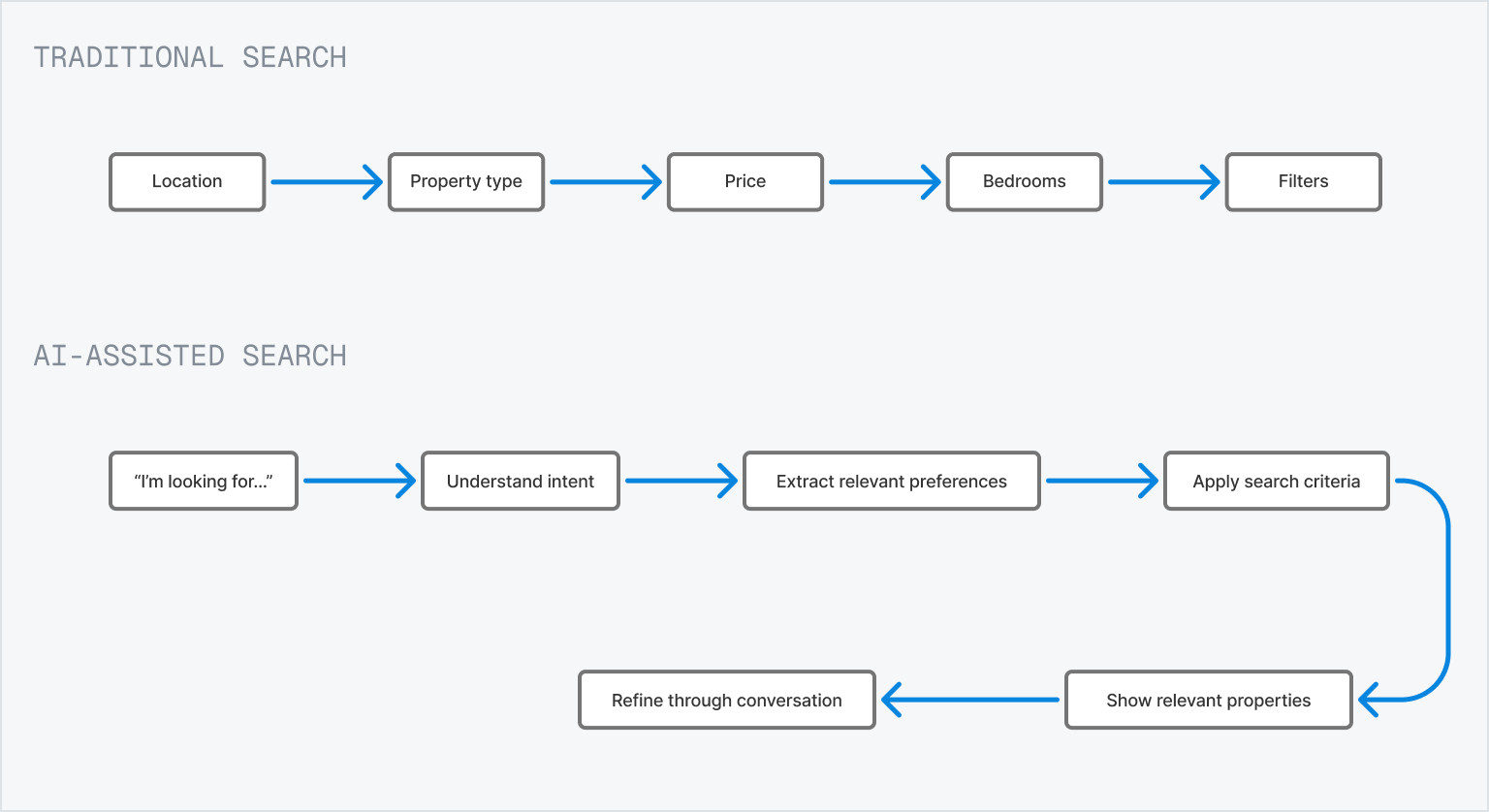
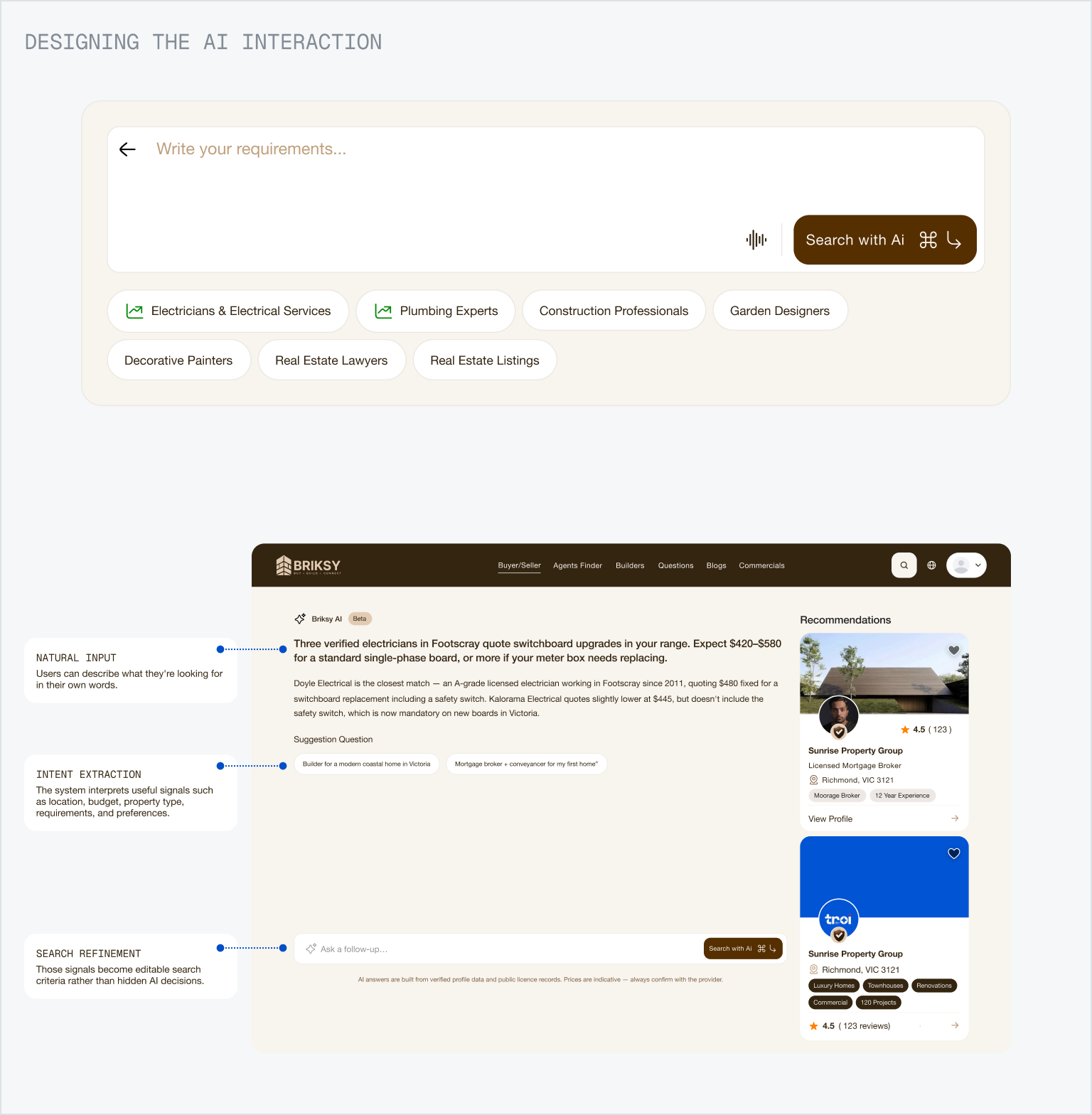
What if users could search by intent, not just keywords?
Traditional property search usually starts with structured inputs: location, price, bedrooms, property type.
But property decisions are rarely that structured.
A user might know what they want without knowing the exact filters:
“Find me a modern 3-bedroom home near Melbourne with space for a home office.”
Trust should be visible before the first conversation.
A marketplace connecting people with properties and professionals needs more than attractive profiles. Users need signals that help them understand who they are dealing with and why they can trust them.
For BRIKSY, trust became part of the product experience, not something hidden behind an approval process.
Verify identity & business
Depending on the provider type, BRIKSY can collect information such as: ABN / Business Registration · Licences · Government ID · Insurance · Certifications
Show experience
Instead of relying only on claims, provider profiles can surface: Years of experience · Completed projects · Portfolio · Testimonials
Make credibility visible
Important trust signals appear where users make decisions: • Verified • Ratings & reviews • Service area • Licences & certifications
Keep verification role-specific
Not every provider follows the same approval path. Builders · Property Agencies · Buyers Agents → Manual approval Other provider categories → Automatic approval
The design principle was simple:
Don't make users search for reasons to trust a provider. Surface the evidence where the decision happens.
Different providers. Different needs. One system.
BRIKSY isn't only a marketplace for people searching for properties. It also needs to work for the people and businesses supplying them.
That meant designing a provider experience that could support organisations, builders, agents, and independent professionals without forcing everyone through the same workflow.
Turning the ecosystem into one connected experience.
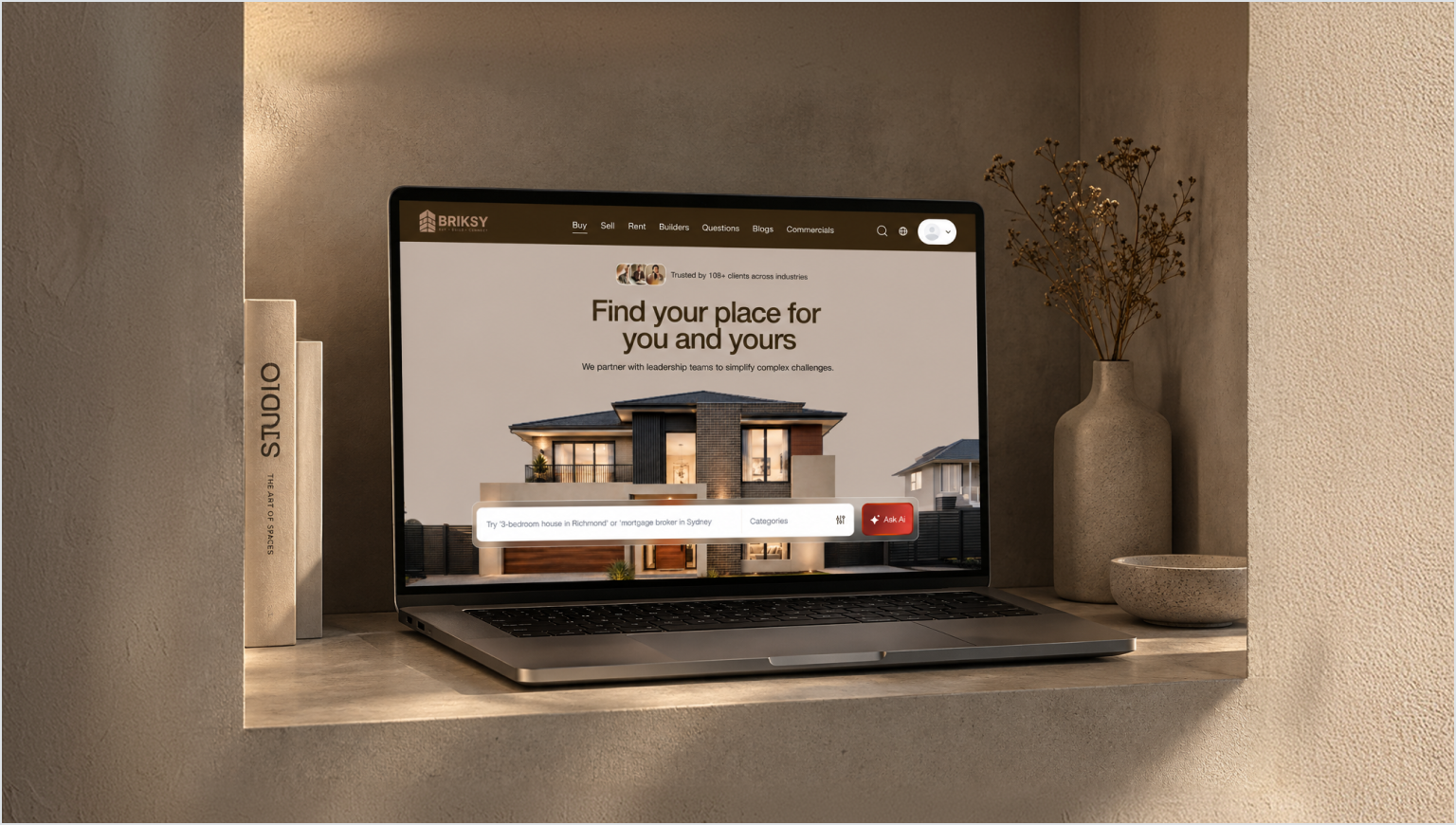
After defining the journeys, architecture, and core interaction patterns, I brought the system together into a cohesive visual language.
The final experience connects property discovery, professional discovery, trust, communication, and provider management without making the platform feel overwhelming.
What I learned
Complexity is a design problem, not a product problem.
BRIKSY spans properties, builders, agents, trades, and independent professionals, each with different workflows, permissions, and publishing needs. The hardest design work wasn't making it look unified; it was making the complexity invisible to end users while keeping it navigable for providers.
Trust is a system, not a feature.
Verification, reviews, portfolios, and service areas only work when they appear at the moment a user is making a decision. Designing trust into the discovery and profile experience (not as an add-on) changed how the entire platform felt.