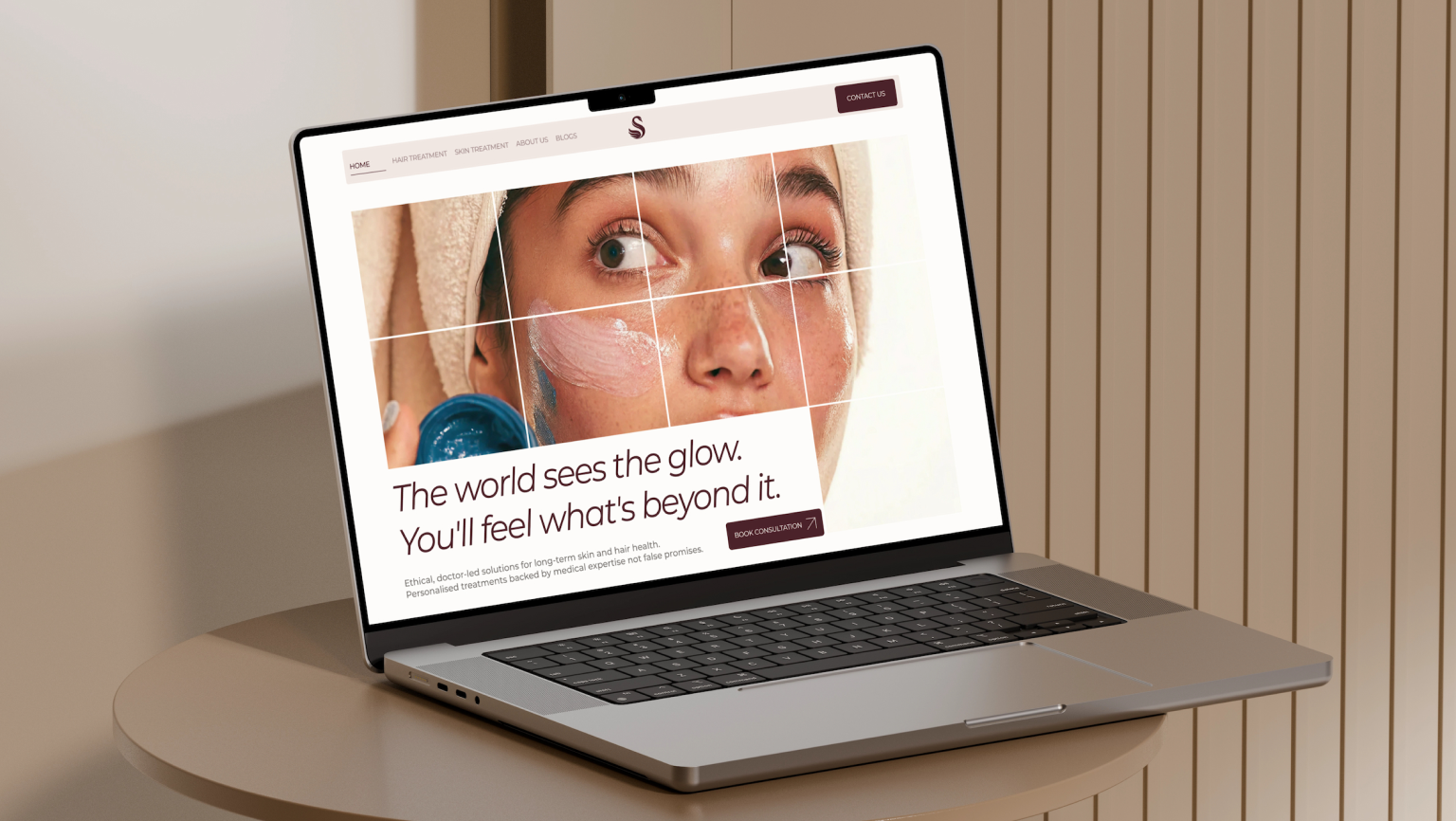
Brand, website and CRM for SOUL Clinic.
Product Designer & Brand Strategist
Jan - Dec 2023
1 PM, 2 Engineers, 1 Designer (me!)
Product Design
Brand Identity
User Research
SOUL's patient records, bookings, and results lived across paper notebooks and WhatsApp threads, with no way to control who saw what or showcase real treatment outcomes.
SOUL is a hair and skin clinic in Mumbai, run by Dr. Freedom Chandel, offering treatments across hair restoration, scalp disorders, and skin rejuvenation. But day-to-day operations were held together by paper and WhatsApp, with no structured system for patient records, billing, or consent, and no way to turn real results into marketing material. EngXLab built the brand, the website, and a custom CRM to replace all of it.
SOUL: A brand, website, and CRM built around the patient's actual journey.
SOUL is a unified system that replaces paper and WhatsApp with one platform, tying together patient intake, treatment records, billing, consent, and inventory. From the moment a patient scans a QR code at check-in to the moment a prescription becomes an invoice, SOUL tracks it.
Here are some of the key flows on SOUL...
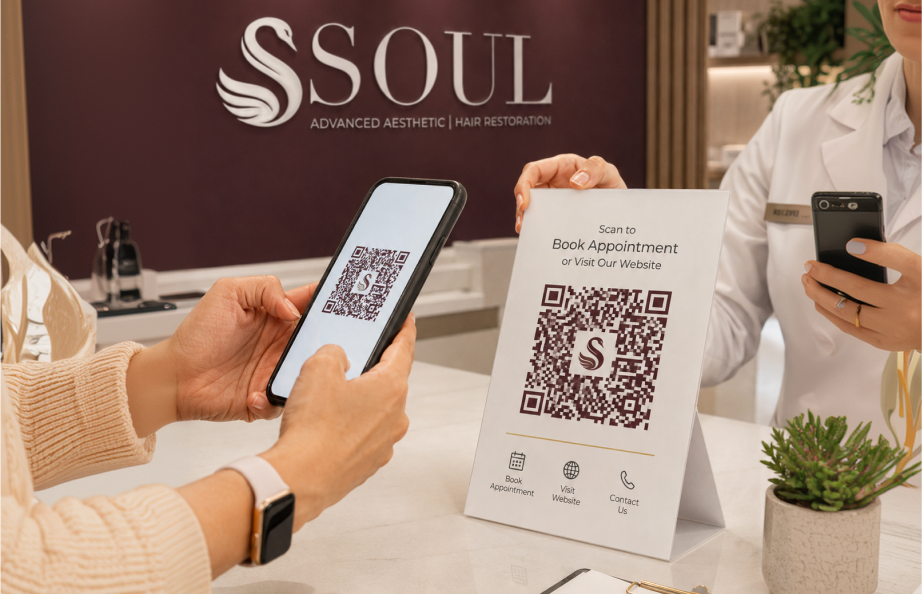
Patient check-in via QR code scan.
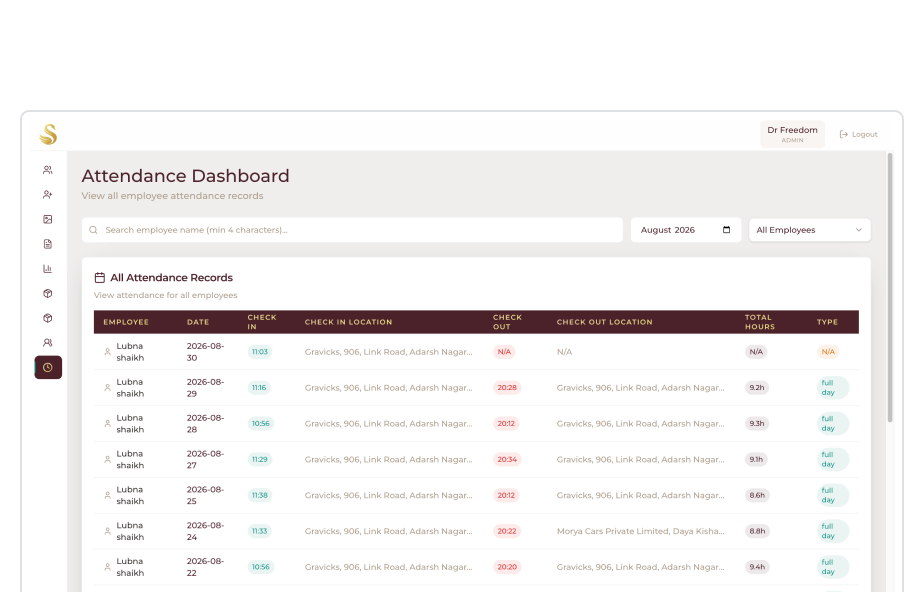
Staff attendance tracked directly in the CRM.
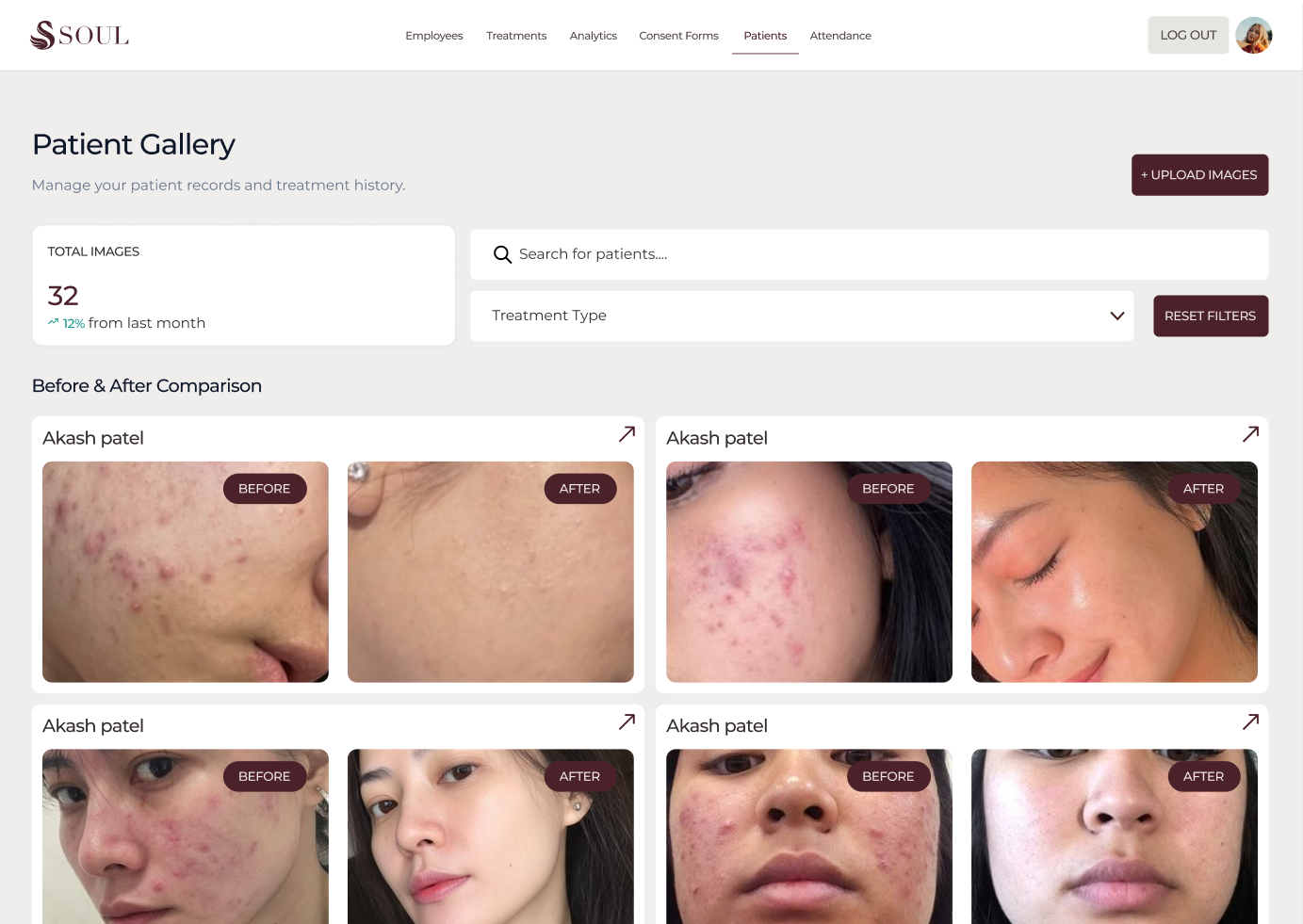
Patient gallery: real before-and-after treatment results.
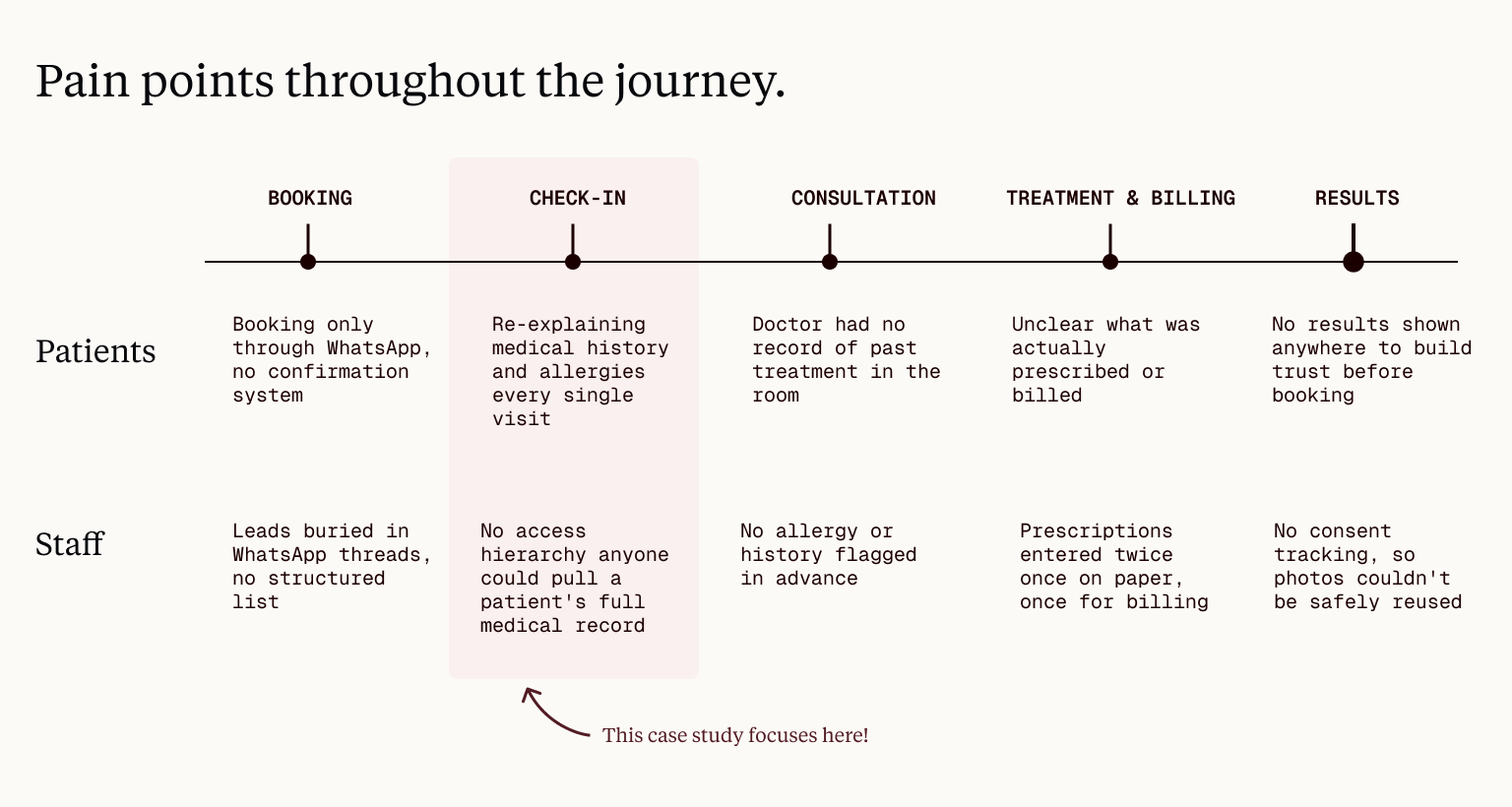
There was no hierarchy for who could see what, and no structured way to capture consent or showcase real results.
Working directly with Dr. Chandel's team, we mapped where the paper-and-WhatsApp system was actually breaking down before writing a line of code. Four things stood out: patient data had no access boundaries, consent for photos was never captured at the right moment, prescriptions and billing lived in separate places, and there was no way to turn real treatment outcomes into marketing.
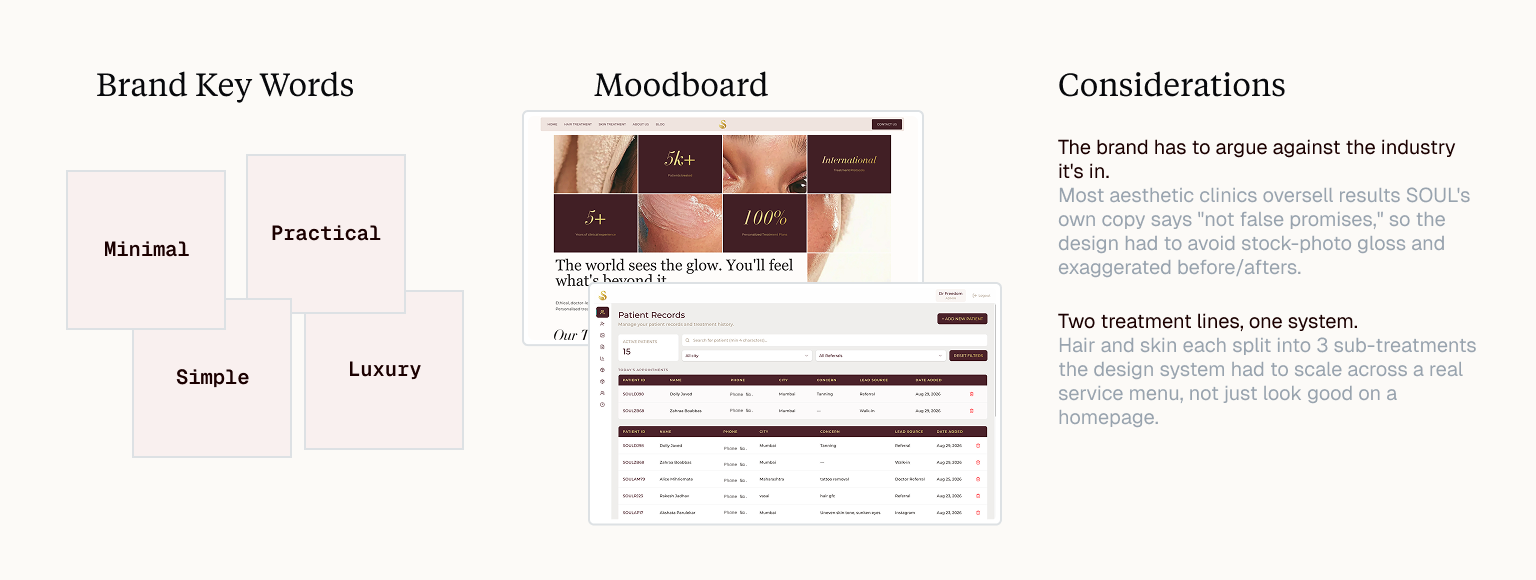
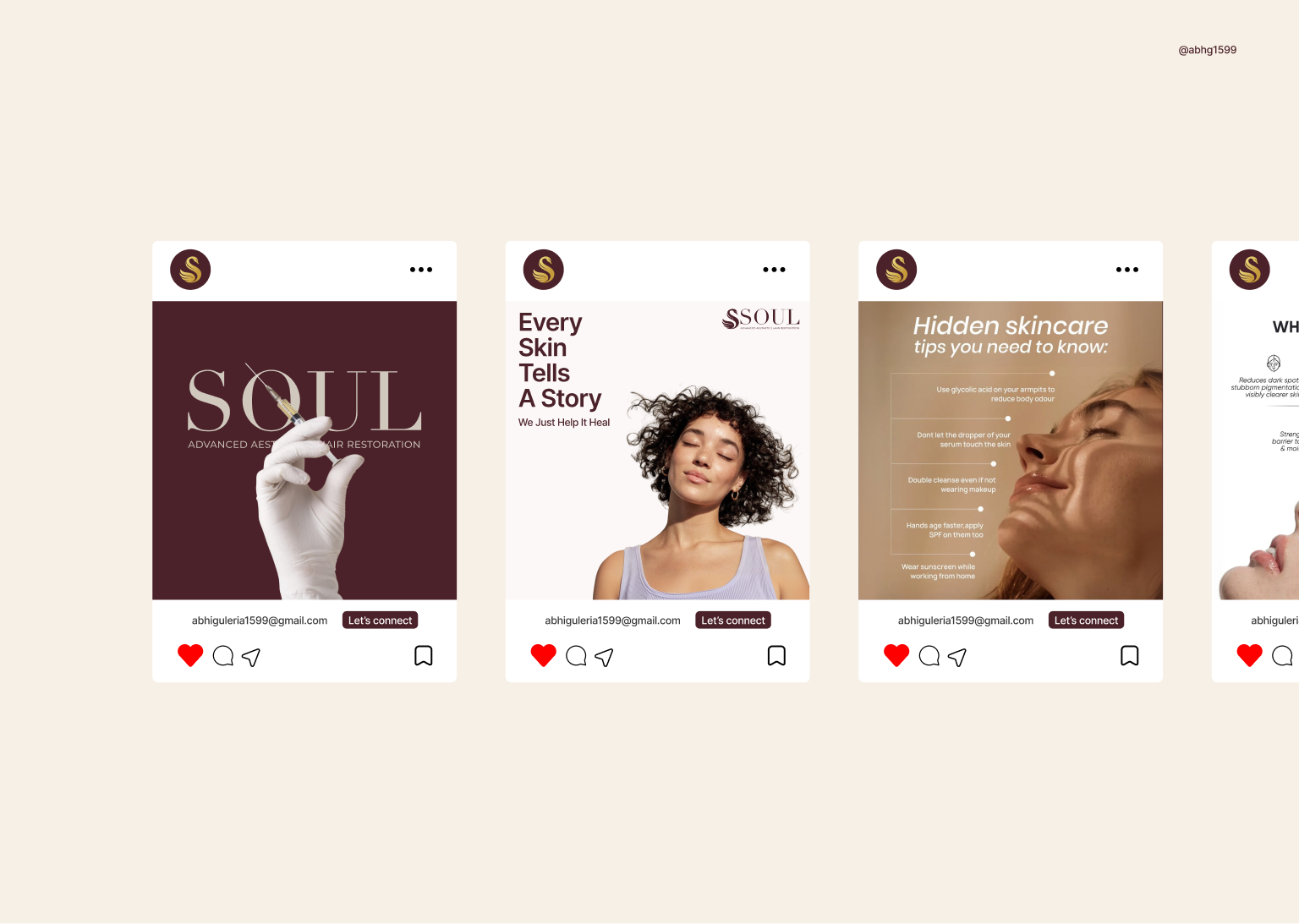
I built a brand system that had to say what most clinics won't: results, not promises.
When I started on Soul, there was no existing brand at all: no colors, no type, no direction. I worked from the clinic's own positioning to identify the brand keywords, which shaped the visual direction. In this process, we kept 2 key considerations in mind:
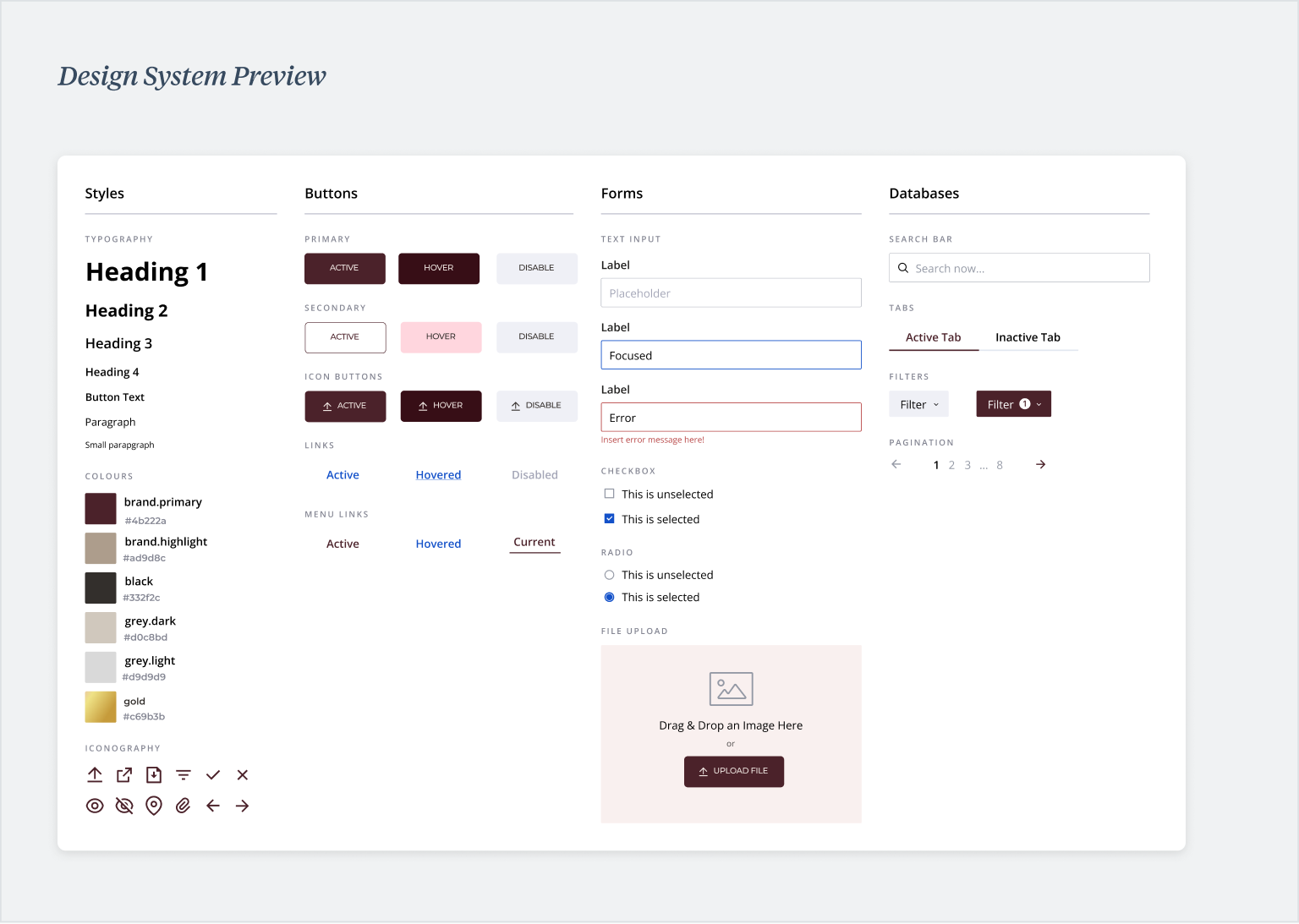
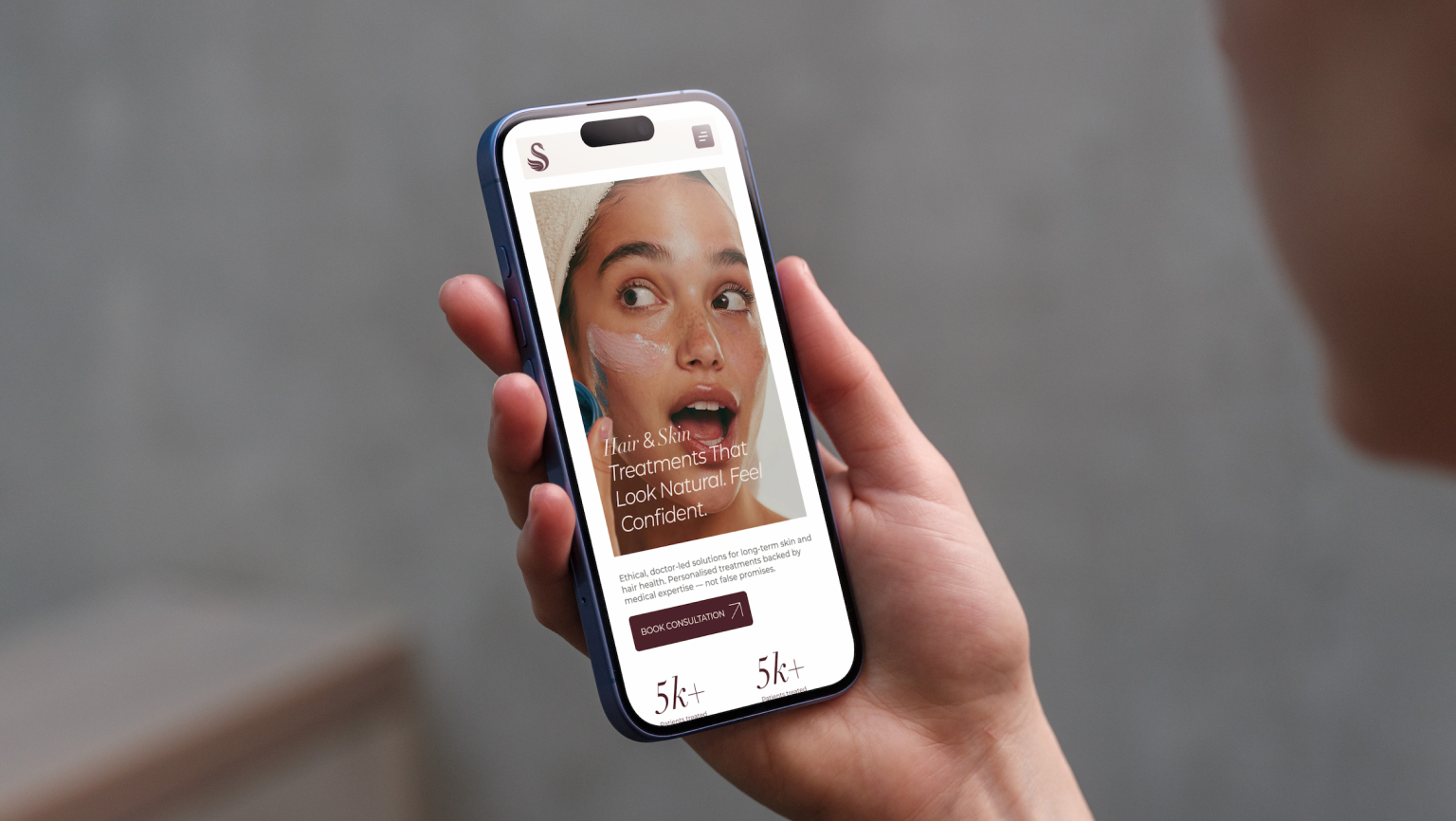
With the brand vision and considerations set, I developed a simple design system to streamline the site build and keep the brand consistent across every treatment page.
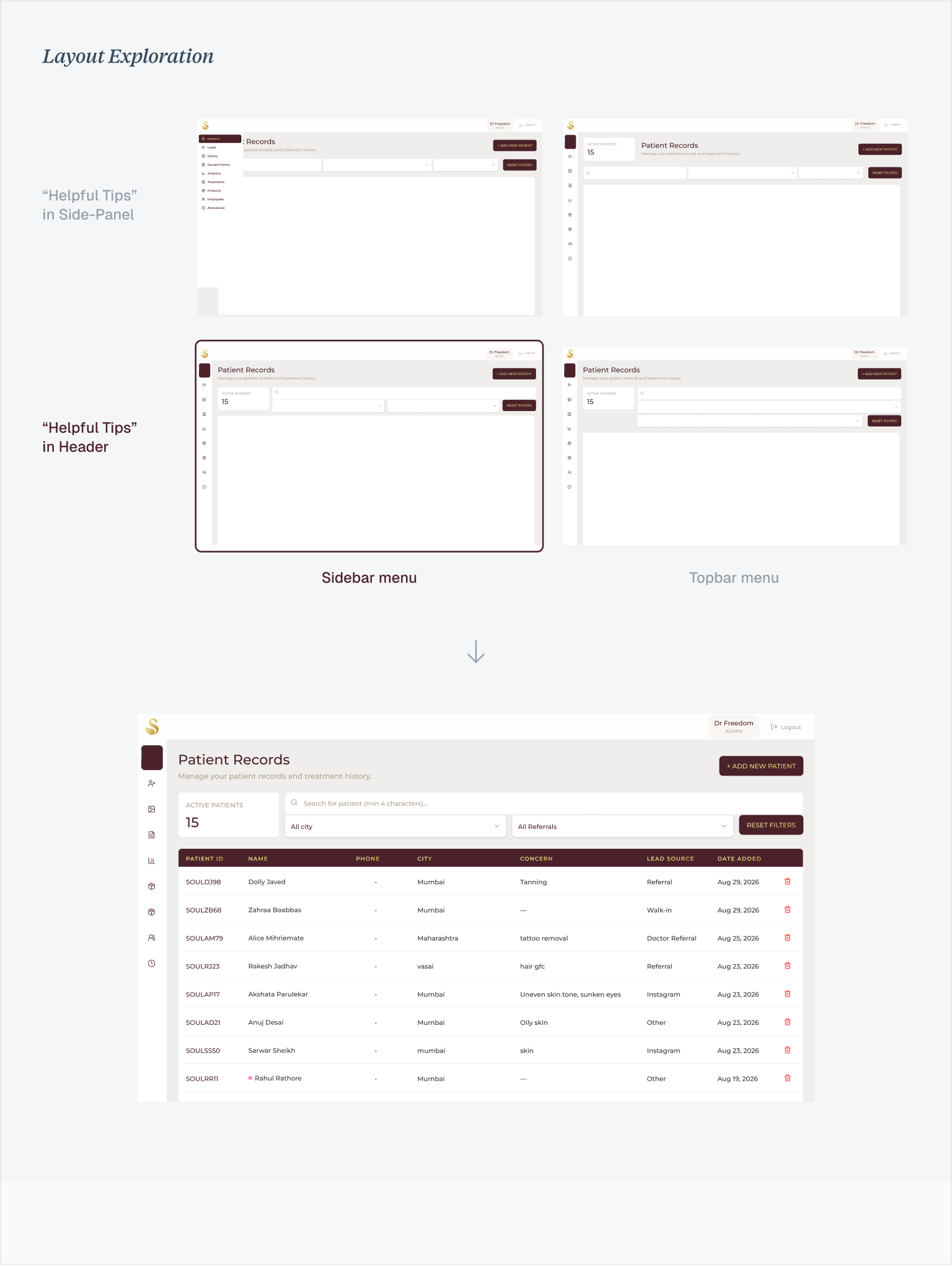
Staff need one screen that tells them who's waiting and who needs what, without digging.
The admin dashboard is the operational home base for SOUL's team: Employees Management, Analytics, and Treatments & Packages all live in one system instead of scattered spreadsheets. For the doctor specifically, this meant the live patient queue: by the time a name is called, their history, allergies, and past treatments are already on screen, so the room doesn't lose time gathering information the clinic already has.
The dashboard structure follows the actual access hierarchy: front desk sees queue and contact info, staff see leads and follow-ups, admins see the full patient and business picture, so "one dashboard" doesn't mean "one view for everyone."
We put SOUL live with a real clinic, not a staging environment.
Once the brand, website, and CRM were built, SOUL went live for Dr. Freedom's actual patients, not a test group. Within weeks, the clinic sent back a direct list of what wasn't working: inconsistent fonts across pages, the "SOUL" name not showing clearly enough in the header, no before-and-after results section yet, and SEO keywords not implemented. That list became the priority order for the next round of work.
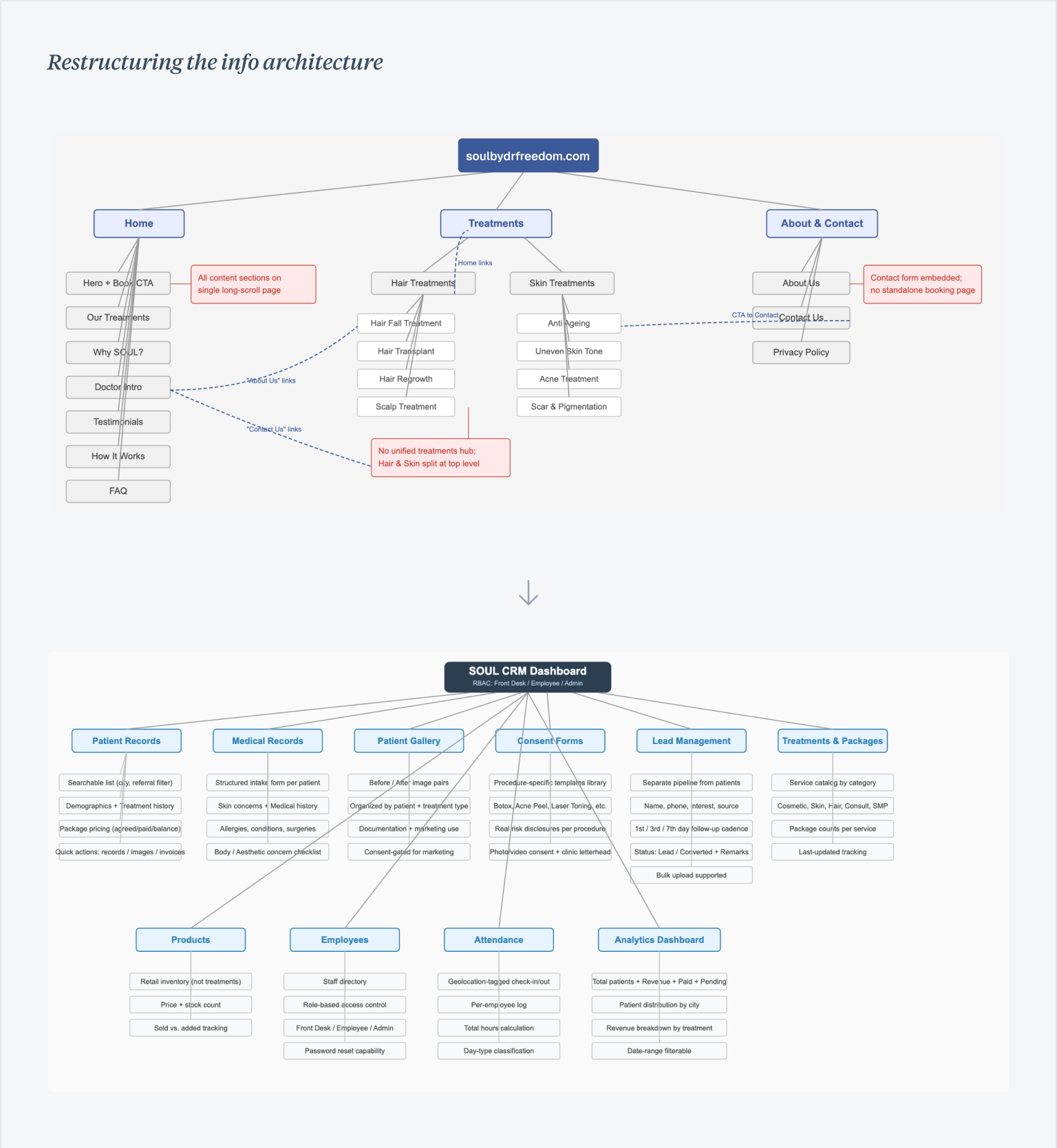
From soulbydrfreedom.com to the clinic floor: one connected structure.
The website and the CRM aren't two separate builds; they're one architecture split across two audiences. The site converts a visitor into a lead; the CRM carries that person from check-in through consultation, billing, and results, with role-based access built in from the ground up.
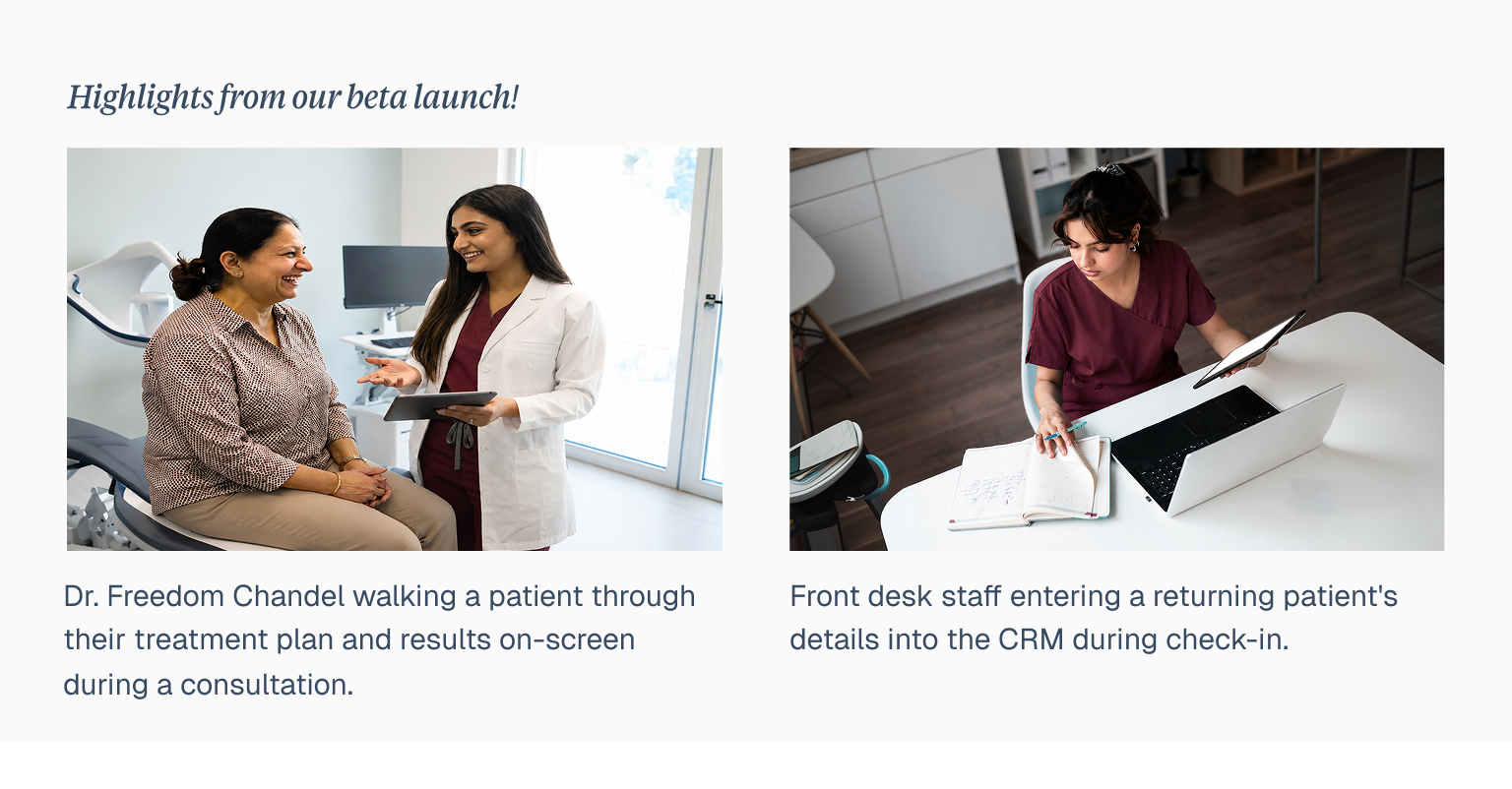
We launched SOUL with real patients, not a demo.
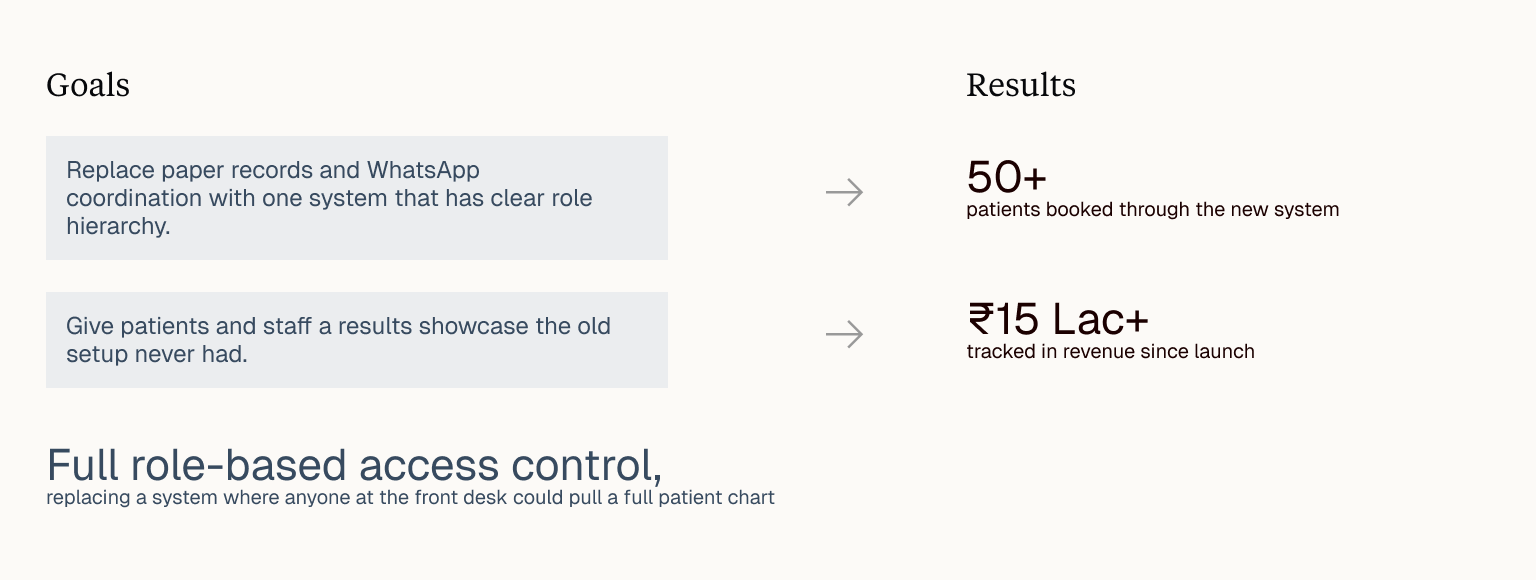
SOUL went live in Andheri West with 50+ patients booked through the new system and ₹15L in tracked revenue in the first 2 Months. No staging environment, no test data: the clinic's actual queue, on day one.
With SOUL, we were able to move the clinic off paper and WhatsApp into one connected system:
What I learned
Operational chaos, not treatment quality, was the real bottleneck.
The clinic wasn't struggling to deliver good care; it was struggling to track who had access to what, and who owed how much. The technical work that mattered most wasn't the interface, it was the access model underneath it.
In health data, access is the risk, not the interface.
A clean UI doesn't matter if the wrong person can open it. The front-desk incident made that concrete: the fix wasn't a design polish, it was rebuilding who gets to see what before anything else shipped.